
Baseball stretches PDF routines are vital for performance and injury prevention, incorporating dynamic and static exercises for optimal muscle preparation and recovery.
Why Stretching is Crucial for Baseball Players
Baseball stretches PDF guides emphasize the unique demands placed on players, requiring a comprehensive approach to flexibility and mobility. The explosive movements inherent in throwing, hitting, and fielding necessitate well-prepared muscles to prevent strains and tears. A dedicated stretching routine, often detailed within these PDFs, enhances range of motion, allowing for greater power generation and improved athletic performance;
Furthermore, consistent stretching improves blood flow to muscles, accelerating recovery between innings and games. Ignoring flexibility can lead to decreased performance, increased risk of injury, and a shortened career. Baseball stretches PDF resources often highlight the importance of dynamic warm-ups before activity and static stretches post-game, creating a balanced regimen for optimal physical condition. Prioritizing stretching is, therefore, not merely beneficial, but essential for baseball players at all levels.
Benefits of a Dedicated Stretching Routine
Baseball stretches PDF materials consistently demonstrate that a focused routine yields significant advantages. Increased flexibility directly translates to a wider range of motion, improving throwing velocity and bat speed. Enhanced muscle elasticity reduces the likelihood of strains, sprains, and other common baseball injuries, keeping players on the field.
Beyond injury prevention, a consistent stretching program, as outlined in many baseball stretches PDF guides, improves posture and biomechanics, leading to more efficient movement patterns. This efficiency conserves energy and enhances overall athletic performance. Moreover, stretching promotes blood circulation, aiding in muscle recovery and reducing post-exercise soreness; Ultimately, a dedicated routine, easily accessible through a baseball stretches PDF, is a cornerstone of a successful and sustainable baseball career.
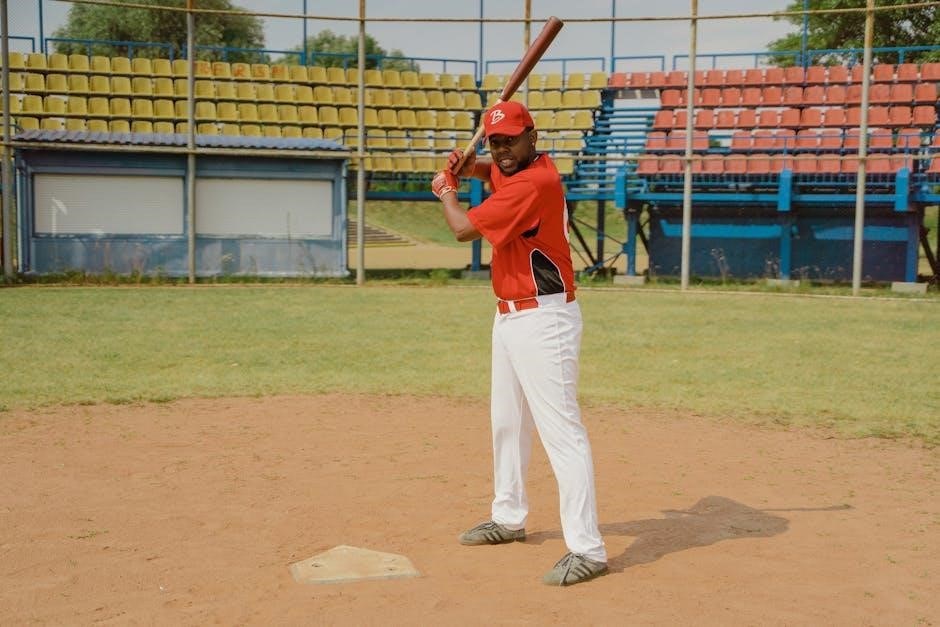
Dynamic Warm-up Stretches for Baseball
Baseball stretches PDF resources emphasize dynamic movements, preparing muscles for action through controlled motions and a full range of motion exercises.
Arm Circles (Forward & Backward)
Baseball stretches PDF guides frequently include arm circles as a foundational dynamic warm-up exercise. Performing small, controlled circles forward for approximately 20-30 seconds increases blood flow to the shoulder muscles and improves range of motion.
Following the forward motion, reverse the direction and perform backward arm circles for the same duration. This counter-movement is crucial for balanced shoulder preparation, addressing both anterior and posterior muscle groups.
Focus on maintaining good posture throughout the exercise – a straight back and engaged core. Gradually increase the size of the circles as comfort allows, but avoid any jerky or uncontrolled movements. Proper form is paramount to prevent injury and maximize the benefits of this simple yet effective stretch. These are often included in pre-game routines.
Leg Swings (Forward, Backward & Sideways)
Baseball stretches PDF resources consistently highlight leg swings as a key component of a dynamic warm-up. Begin with forward leg swings, gently swinging one leg forward and backward, keeping the leg relatively straight but not locked. Perform 10-15 swings per leg, focusing on controlled movement and increasing range of motion gradually.
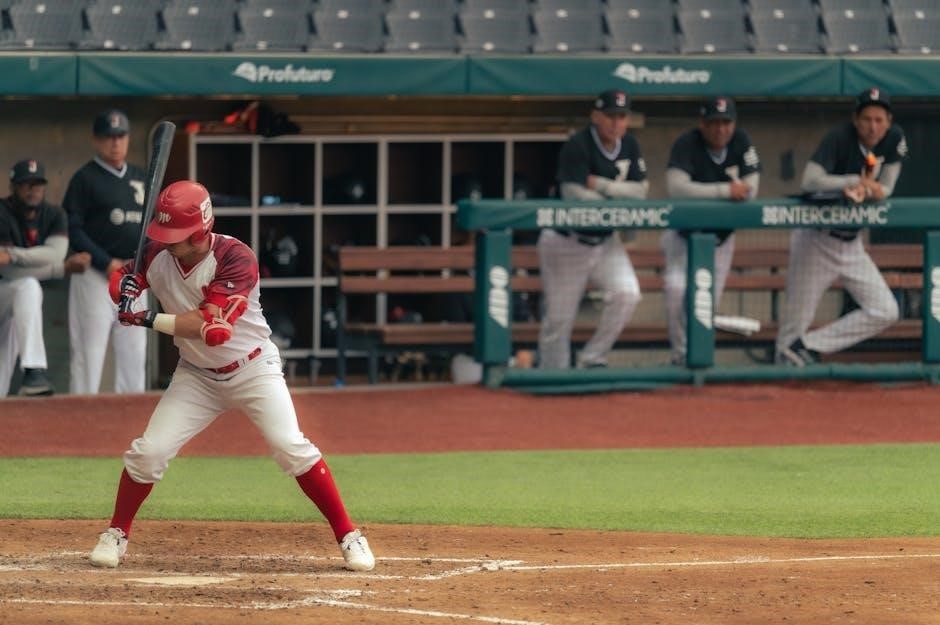
Next, incorporate backward leg swings, mirroring the forward motion but swinging the leg backward. Finally, add sideways leg swings, swinging the leg across the body and then out to the side.
These movements prepare the hip flexors, hamstrings, and adductors for the demands of baseball. Maintaining balance is important; use a stable surface or wall for support if needed. Controlled swings are essential to avoid strains.
Torso Twists
Baseball stretches PDF guides frequently include torso twists as a crucial dynamic stretch. Begin by standing with feet shoulder-width apart and arms bent at the elbows, held in front of your chest. Gently twist your torso from side to side, keeping your lower body stable and your core engaged.
Focus on rotating through your spine, avoiding any jerky or forced movements. Perform 15-20 repetitions, ensuring a controlled range of motion. This exercise enhances spinal mobility and prepares the core muscles for rotational power – vital for hitting and throwing.
Proper form is key; maintain a slight bend in your knees and keep your back straight. Torso twists improve flexibility and coordination, contributing to overall athletic performance.

Static Stretching for Baseball
Baseball stretches PDF resources emphasize holding stretches for 20-30 seconds, improving flexibility and range of motion post-activity for optimal recovery.
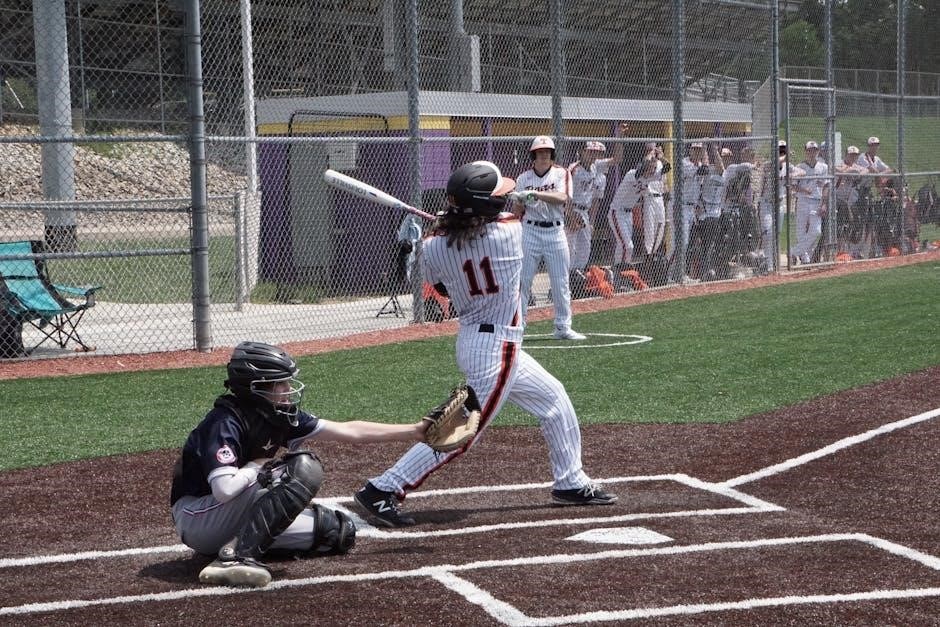
Hamstring Stretches
Baseball stretches PDF guides frequently highlight hamstring flexibility as crucial for a powerful stride and preventing lower body injuries. Several variations are commonly included, such as seated toe touches, where players sit with legs extended and reach towards their toes, maintaining a straight back. Another effective stretch is the standing hamstring stretch, performed by placing one leg on a slightly elevated surface and gently leaning forward.
Dynamic hamstring stretches, like leg swings, prepare the muscles for activity, while static holds, sustained for 20-30 seconds, improve long-term flexibility. Proper form is paramount; avoid bouncing or forcing the stretch. A baseball stretches PDF will often demonstrate these techniques with clear illustrations. Consistent hamstring stretching contributes significantly to improved performance and reduced risk of strains during running and hitting.
Quadriceps Stretches
A comprehensive baseball stretches PDF will invariably feature quadriceps stretches, essential for explosive leg drive during hitting and base running. The standing quad stretch is a staple, involving holding one foot behind you, pulling it towards your glutes, and maintaining an upright posture. Variations include using a wall for balance or incorporating a gentle backward lean to deepen the stretch.
Another common exercise is the lying quad stretch, performed by lying on your side and pulling your heel towards your buttock. Dynamic stretches, like high knees, also engage the quads. Holding each stretch for 20-30 seconds promotes flexibility and reduces injury risk. A well-illustrated baseball stretches PDF will demonstrate proper form, emphasizing controlled movements and avoiding overextension. Strong, flexible quads are vital for baseball athleticism.
Groin Stretches
Any effective baseball stretches PDF must include groin stretches, crucial for agility, lateral movement, and preventing pulls during fielding and base running. The butterfly stretch, performed by sitting with soles of feet together and gently pressing knees towards the floor, is a foundational exercise. Side lunges dynamically stretch the groin, mimicking baseball’s lateral demands.
Another beneficial stretch is the Copenhagen plank, a more advanced exercise requiring core stability. Static holds of 20-30 seconds are recommended for each stretch. A detailed baseball stretches PDF should visually demonstrate correct technique, emphasizing a controlled range of motion and avoiding pain. Strengthening the adductors alongside stretching enhances stability and reduces injury susceptibility. Prioritizing groin flexibility is paramount for baseball players.

Baseball-Specific Stretching Exercises
Baseball stretches PDF guides emphasize exercises targeting the shoulder, wrist, and forearm – areas uniquely stressed by throwing motions and fielding demands.
Shoulder Rotator Cuff Stretches
Baseball stretches PDF resources consistently highlight the importance of rotator cuff care. These muscles stabilize the shoulder joint, crucial for throwing velocity and preventing injuries. Sleeper stretches, performed by lying on the affected side and gently rotating the forearm downwards, are frequently included.
External rotation stretches, using a resistance band to pull the arm across the body, also feature prominently. Internal rotation stretches, conversely, involve pulling the arm inward while maintaining a stable elbow position. Proper form is paramount; avoid overextension or pain.
A comprehensive baseball stretches PDF will detail repetitions and hold times for each exercise, often recommending 2-3 sets of 10-15 repetitions. These stretches enhance flexibility, improve range of motion, and contribute significantly to shoulder health, ultimately boosting performance on the field.
Wrist Flexor and Extensor Stretches
A detailed baseball stretches PDF will invariably include exercises targeting wrist flexibility. These stretches are often overlooked, yet vital for bat control and fielding. Wrist flexor stretches involve extending the arm, palm up, and gently pulling the fingers towards the body with the opposite hand. Hold for 15-30 seconds, repeating 2-3 times.
Conversely, wrist extensor stretches require extending the arm, palm down, and pulling the fingers downwards. These movements counteract the repetitive stress of swinging and throwing. Many baseball stretches PDF guides suggest performing these stretches both statically and dynamically.
Dynamic wrist circles and gentle wrist extensions/flexions prepare the muscles for action, while static holds improve overall flexibility. Ignoring these stretches can lead to wrist pain and decreased performance, making them a crucial component of any baseball conditioning program.
Forearm Stretches
Any comprehensive baseball stretches PDF must dedicate a section to forearm conditioning. Forearm muscles are heavily engaged during throwing and batting, making them prone to tightness and injury. A common stretch involves extending the arm, palm up, and gently pulling the fingers towards the body with the opposite hand, feeling the stretch along the forearm.
Reverse this motion – palm down, fingers pulled back – to target the opposite side; These stretches should be held for 20-30 seconds, repeated several times. A good baseball stretches PDF will also illustrate forearm pronation and supination exercises.
These rotational movements improve range of motion and prevent imbalances. Neglecting forearm flexibility can contribute to elbow pain and reduced throwing velocity, highlighting their importance in a complete baseball stretching routine.

Creating a Baseball Stretching PDF Routine
Baseball stretches PDF guides benefit from clear organization, detailed instructions, and visual aids to ensure players understand and correctly perform each exercise safely.
Structuring a Comprehensive PDF Guide
A well-structured baseball stretches PDF should begin with an introduction outlining the importance of stretching for baseball players, emphasizing injury prevention and performance enhancement. Categorize stretches into sections: dynamic warm-up, static stretching, and baseball-specific exercises. Each stretch requires a dedicated page featuring a clear title, detailed step-by-step instructions, and a high-quality image or diagram illustrating proper form.
Include notes on repetitions, hold times, and breathing techniques. A progression system – beginner, intermediate, advanced – allows players to tailor the routine to their fitness level. Consider adding a section on cool-down stretches and foam rolling for post-game recovery. Finally, a disclaimer regarding consulting with a healthcare professional before starting any new exercise program is crucial for safety and legal considerations. Proper formatting and a table of contents enhance usability.
Incorporating Visual Aids (Images/Diagrams)
High-quality visual aids are paramount in a baseball stretches PDF. Clear images or detailed diagrams dramatically improve understanding of proper form, minimizing risk of injury. Each stretch should have a corresponding visual demonstrating the starting and ending positions, highlighting key muscle engagement. Utilize arrows and annotations to emphasize correct body alignment and movement patterns.
Consider including multiple angles for complex stretches. Photographs of actual baseball players performing the stretches can enhance relatability. Ensure images are high-resolution and professionally presented. Diagrams should be clean and uncluttered, focusing on anatomical accuracy. Visuals aren’t merely decorative; they are integral to effective instruction, making the PDF accessible to all skill levels and promoting safe stretching practices.

Cool-down Stretching & Recovery
Baseball stretches PDF guides should emphasize post-game static stretches and foam rolling for muscle recovery, reducing soreness and improving flexibility.
Importance of Post-Game Stretching
Baseball stretches PDF resources consistently highlight the critical role of post-game stretching in a player’s recovery process. Following intense physical exertion, muscles accumulate microscopic damage and become shortened. Neglecting to stretch after a game can lead to increased muscle soreness, stiffness, and a heightened risk of injury.
A dedicated cool-down routine, incorporating static stretches held for 20-30 seconds, helps restore muscles to their optimal length and reduces post-exercise inflammation. This improved flexibility not only aids in quicker recovery but also enhances future performance by allowing for a greater range of motion.
Furthermore, post-game stretching facilitates the removal of metabolic waste products, such as lactic acid, from the muscles, minimizing fatigue and promoting faster healing. A well-structured baseball stretches PDF will detail specific stretches targeting the muscle groups most utilized during gameplay, ensuring a comprehensive and effective recovery strategy.
Foam Rolling Techniques for Muscle Recovery
Many baseball stretches PDF guides now integrate foam rolling as a crucial component of muscle recovery. This self-myofascial release technique effectively addresses muscle tightness and improves blood flow, complementing traditional stretching exercises. Foam rolling helps break down adhesions – knots in the muscle tissue – that can restrict movement and cause pain.
Focus areas for baseball players include the calves, hamstrings, quadriceps, glutes, and back. Applying moderate pressure while slowly rolling along the muscle length for 30-60 seconds per area is recommended.
Integrating foam rolling into a post-game or recovery routine, as detailed in a comprehensive baseball stretches PDF, can significantly reduce muscle soreness, enhance flexibility, and accelerate the healing process, ultimately contributing to improved athletic performance and injury prevention.